
Yes Shef
A celebration, and a declaration.
By Joanna Jagger, Executive Director and Founder, WORTH – Women of Recreation, Tourism and Hospitality Association
I didn’t set out to become an advocate for women in this industry. I set out to be a cook.
If I look closely enough, I can still see the scars. Little constellations formed from splattering oil in between burns from hitting a hot pan during a rush. Like many women in kitchens, there are scars that run deeper. Ones that I carry into my work at WORTH Association, the organization dedicated to the women of recreation, tourism and hospitality.
My love of food started at home, the way it does for so many of us. My mother was a fabulous cook and natural entertainer. Our kitchen was full of warmth, noise, and the quiet magic of someone showing love through a meal. That’s where my flame was sparked. Food meant care, creativity and connection.
I didn’t yet know it could also mean power, ego and exclusion. I didn’t know it could mean swearwords hurdled across the kitchen along with metal spatulas.

At 13, I enrolled in my high school’s “culinary arts” program. The title sounded grand. The reality was hairnets and serving cafeteria slop. Still, I was thrilled. This felt like the first step toward something bigger.
Like many culinary classrooms, it was female dominated. But we weren’t dominating. I remember hearing, “women belong in the kitchen” from our male classmates, a jab to remind us of our place.
I took their words as fuel. I learned that in this space, being good was never enough. I had to be undeniable.
That truth followed me into professional kitchens. On my first day, a sous chef looked at me and said, “You know, girls can’t really handle this job.” He said it so matter-of-factly, I was stunned.
At that moment I understood this job wasn’t just cooking. It was a test.
When I got in the weeds with chits piling up, heat rising and adrenaline surging, I didn’t complain. I put my head down and moved faster. I wasn’t just working in a kitchen. I was trying to prove something to him, to the team, and to myself.
Months later, he told me I was actually pretty good. For a girl.
That qualifier lingered long after the compliment faded.
I learned early how to make myself smaller and tougher at the same time, trying to take up less emotional space while doing more than my colleagues. I learned how to move fast, speak loudly (“Yes, Chef!”) and to never, ever show weakness. Except, of course, in the walk-in fridge where countless women have paused, cried, and then stepped back out.
Instead of mentors, I studied the chefs I saw celebrated. The rockstars. The rebels. The “geniuses.” The Food Network icons whose intensity and ego were framed as brilliance. Many of those same figures would later be linked to scandals, including sexual harassment.
At the same time, the women in food media were often cast as caretakers, homemakers, and hosts of the domestic sphere. Think of the contrast in portrayal: Ramsay versus Rachel Ray. Guy Fieri versus Giada. Mario Batali versus Martha. Men rewarded for authority and edge, women expected to provide comfort and caretaking.
For generations, women’s labour in food has been invisible. Considered a responsibility. Just what we do. But when cooking became profitable, prestigious, and powerful, the gender equation changed with it.
The irony isn’t lost on me that nearly every male chef I’ve met traces his love of food back to a woman: a grandmother’s hands dusted in flour, a mother tasting sauce from a wooden spoon. Over and over, the origin story is the same. A woman sparked the flame. Then the spotlight moved elsewhere.
Years later, I read research that described my experience almost word for word. Women chefs report being tested more and having to demonstrate both physical and mental toughness just to be taken seriously. Many talk about carefully managing their emotions and words so they aren’t labelled “too emotional.” Frustration must be swallowed. Confidence must be calibrated. Strong, but not threatening. Capable, but not intimidating.
We walk a tightrope of double standards.
I learned that 68% of women feel they must perform better than men to be seen as equally competent. Our successes are more likely to be attributed to luck; our mistakes are noticed more and remembered longer. When I read those numbers, I didn’t feel surprised. I felt seen. And I felt tired.
Because the truth is, many women don’t stay long enough to change the system. They leave. The majority of women in hospitality will exit an organization rather than voice concerns about exclusion, discrimination, or bias. Not because they don’t care, but because the cost of staying can feel higher than the cost of leaving.


That breaks my heart. We are losing more than women in F&B. We are losing brilliant leaders, innovators, mentors, and perspectives that could reshape this industry for the better.
I’ve witnessed a lot over my career: ego, brilliance, brutality, camaraderie, and the grit that keeps people going. I’ve seen women bend themselves into shapes that don’t fit just to survive.
I’ve also seen what happens when they’re given space to lead as themselves. The difference is extraordinary.
That’s why championing women in food and beverage is personal. It’s urgent. It’s about rewriting a narrative that never should have been written this way.
It’s also why Yes Shef exists.
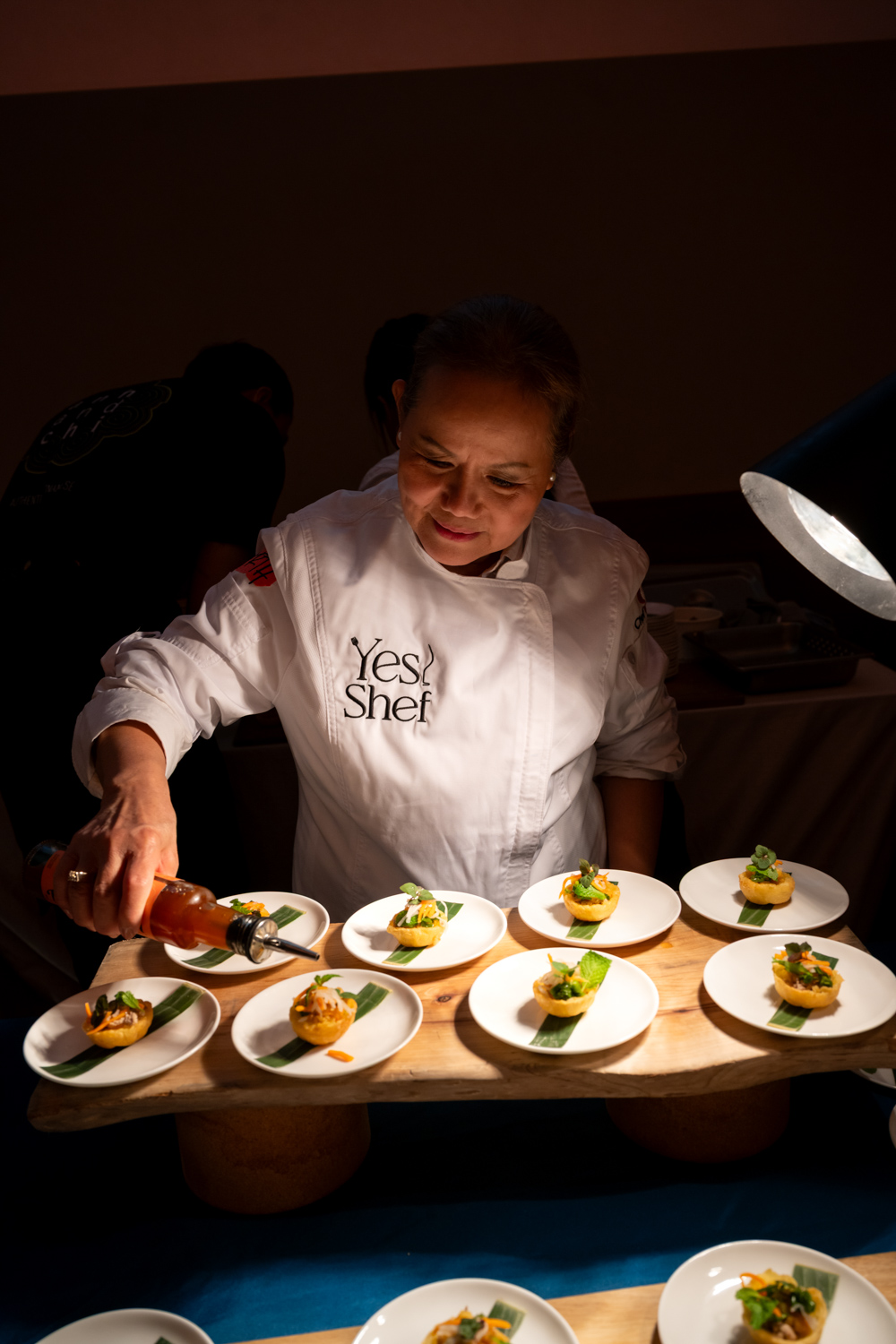
Yes Shef is not just an event, it’s a declaration. A room where the spotlight unapologetically shifts toward passionate, talented, driven women in food and beverage. The women who have been leading, creating, mentoring, and innovating all along, whether or not the industry handed them a title for it.
What makes Yes Shef so powerful is that it connects generations. At their stations, established chefs and beverage professionals work alongside young women leaders. Mentorship is happening in real time, over hot pans, cocktail shakers, and shared prep lists. Future hospitality professionals see what’s possible. They see leadership, strength, and visibility in an industry that hasn’t always made space for them.
When I hear, “Women belong in the kitchen,” I don’t flinch anymore. I agree. Hell yes, they do.
And it’s not just about their physical presence. It’s about their psychological safety. It’s about women no longer having to prove, every single day, that they deserve to be there. This belonging will only exist when culture no longer requires people shrinking themselves to fit.
This is still the industry I believe in. The one that nourishes, employs communities, and tells stories through food. But belief isn’t enough. We have to build the future we want to see.
Yes Shef is part of that work.
It honours our grandmothers and mothers whose unpaid labour built our food traditions. It celebrates the women here now, running kitchens, businesses, and movements. And it invests in the next generation, so they inherit an industry where belonging is a given.
I didn’t set out to become an advocate. But if the girl working twice as hard to prove her worth could see what we’re building now, I think she’d feel something she didn’t feel back then.
She’d finally feel she belonged in the kitchen.
And now, that work is happening in real time. Bringing Yes Shef to Mississauga on March 9th feels like a full-circle moment. We’re no longer playing small. We’re building a space where women are centred, celebrated, and supported. A space where attendees connect face to face with talent, discover their stories, and experience their industry-shaping work.
This is your invitation to be part of it.
Get your tickets to Yes Shef at a special RC Show rate.
As part of Yes Shef’s partnership with Restaurants Canada, RC Show attendees save $20.00 on their ticket to this exclusive and unforgettable event when you purchase through the RC Show registration portal.
RC Show Pricing: $200.00 + HST (for registered RC Show attendees and exhibitors)
Visit RCShow.com now and grab your tickets in the registration portal before they’re gone!